
Stop Choosing the Wrong Gate Valve: 5 Expert Secrets to Get It Right Every Time
April 14, 2026 2026-04-20 13:27Stop Choosing the Wrong Gate Valve: 5 Expert Secrets to Get It Right Every Time
 newlifesteeltrading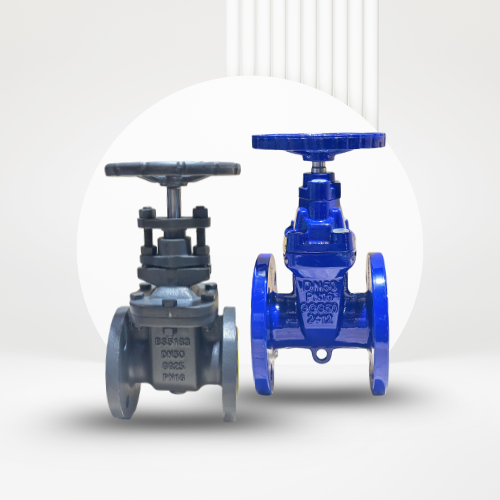
Stop Choosing the Wrong Gate Valve: 5 Expert Secrets to Get It Right Every Time
When it comes to controlling the flow of liquids and gases in pipelines, Gate Valve stands out as one of the most reliable and widely used solutions. Moreover, it is widely used in industrial plants, water supply systems, and oil and gas pipelines. Additionally, flow control valve ensure smooth and efficient flow control with minimal resistance. As a result, they play a critical role in maintaining consistent and reliable operations.
Companies like New Life Steel Trading provide high-quality flow control valve products and industrial components. Moreover, they help businesses maintain reliable pipeline systems. As a result, industries achieve long-lasting performance and improved operational efficiency.
What Is a Gate Valve?
A Gate Valve is a type of valve used to start or stop the flow of fluid. Moreover, it operates by lifting a gate (a flat or wedge-shaped disc) out of the path of the fluid.
Unlike other valves, flow control valve are designed primarily for fully open or fully closed positions, making them ideal for applications where minimal flow restriction is required.
Flow Control Valve Working Principle
The working of a flow control valve is simple yet highly effective:
- When the handle or actuator is turned, the gate moves up or down
- Gate lifted (open position): Fluid flows freely with minimal resistance
- Gate lowered (closed position): Flow is completely blocked
This design ensures a straight-line flow path with very little pressure drop.
Types of Gate Valve
Understanding the different types of Gate Valve helps you choose the right one:
1. Wedge Gate Valve
- Most commonly used
- Wedge-shaped gate ensures tight sealing
- Suitable for high-pressure systems
2. Parallel Gate Valve
- Uses a flat, parallel gate
- Ideal for low-pressure applications
3. Rising Stem Gate Valve
- Stem moves upward when the valve opens
- Easy to visually identify position
4. Non-Rising Stem Gate Valve
- Stem remains inside the valve body
- Best for limited space installations
5. Knife Gate Valve
- Sharp-edged gate
- Designed for slurry and thick fluids
Key Advantages of Gate Valve
The flow control valve offers several important benefits:
- As a result, minimal pressure loss
- Moreover, excellent sealing performance
- Additionally, suitable for high temperature and pressure
- Thus, allows bi-directional flow
- Long service life with proper maintenance
Limitations of Gate Valve
Despite its strengths, a flow control valve has some limitations:
- Not suitable for throttling or regulating flow
- Slower operation compared to other valves
- Can experience wear if partially open
Applications of Gate Valve
The flow control valve is widely used across various industries:
Industrial Applications
- Oil and gas pipelines
- Chemical plants
- Power generation units
Water Systems
- Municipal water supply
- Irrigation systems
- Sewage treatment plants
Other Uses
- Fire protection systems
- Marine applications
Moreover, New Life Steel Trading supplies durable Gate Valve products, thereby supporting these critical applications with consistent performance.
Gate Valve vs Other Valves
Here is a comparison of a Gate Valve with other valve types:
| Feature | Gate Valve | Globe Valve | Ball Valve |
|---|---|---|---|
| Function | On/Off control | Flow regulation | Quick shut-off |
| Pressure Loss | Very Low | High | Low |
| Operation Speed | Slow | Moderate | Fast |
How to Choose the Right flow control valve
Choosing the right flow control valve depends on several key factors:
- First, consider the type of fluid (water, oil, gas, slurry) to ensure compatibility.
- Next, evaluate the operating pressure and temperature for safe performance.
- Additionally, check the pipeline size to ensure proper fit and flow efficiency.
- Moreover, assess the available installation space for correct valve placement.
- Finally, decide between manual or automated operation based on system requirements.
Working with experienced suppliers like New Life Steel Trading ensures you select the most suitable flow control valve for your system. Moreover, it helps achieve better efficiency and long-term reliability. Moreover, it helps improve decision-making for better performance and reliability.
Maintenance Tips for flow control valve
To maximize the lifespan of your flow control valve:
- First, perform regular inspections to identify issues early.
- Next, lubricate the stem and moving parts for smooth operation.
- Additionally, avoid partial opening for long periods to prevent damage.
- Finally, clean internal components regularly to prevent buildup and ensure efficiency.
Conclusion
The Gate Valve remains an essential component in modern fluid control systems due to its durability, efficiency, and simple design. It is widely trusted in industries that require reliable shut-off mechanisms and minimal flow resistance.
With trusted suppliers like New Life Steel Trading, businesses can ensure they are investing in high-quality flow control valve products. As a result, this leads to improved reliability and long-term performance. Thereby, this ensures reliable performance and long-term durability. Moreover, they consistently receive reliable solutions that enhance performance and durability.
Moreover, these products meet industry standards, thereby ensuring reliable performance and long-term durability. As a result, they benefit from long-term performance and reliability. Moreover, this ensures better efficiency and reduced maintenance needs over time.
FAQs About Gate Valve
1. Moreover, what is a Gate Valve used for?
A Gate Valve is used to completely stop or allow the flow of fluids in a pipeline. In other words, it is designed for full open or full close operations, thereby ensuring efficient flow control.
2. Can a flow control valve be used for throttling?
No, a flow control valve is not designed for throttling, because it can damage internal components and reduce overall efficiency.
3. What is the difference between a flow control valve and a Ball Valve?
A flow control valve is used for gradual opening and closing, whereas a ball valve provides quick shut-off. In contrast, gate valves operate slowly, while ball valves are designed for fast and efficient operation.
4. Why is flow control valve preferred in pipelines?
Because it offers minimal pressure drop and allows smooth, unrestricted flow.
5. How long does a flow control valve last?
With proper maintenance, a flow control valve can last for many years, especially in industrial applications.
